
Short answer
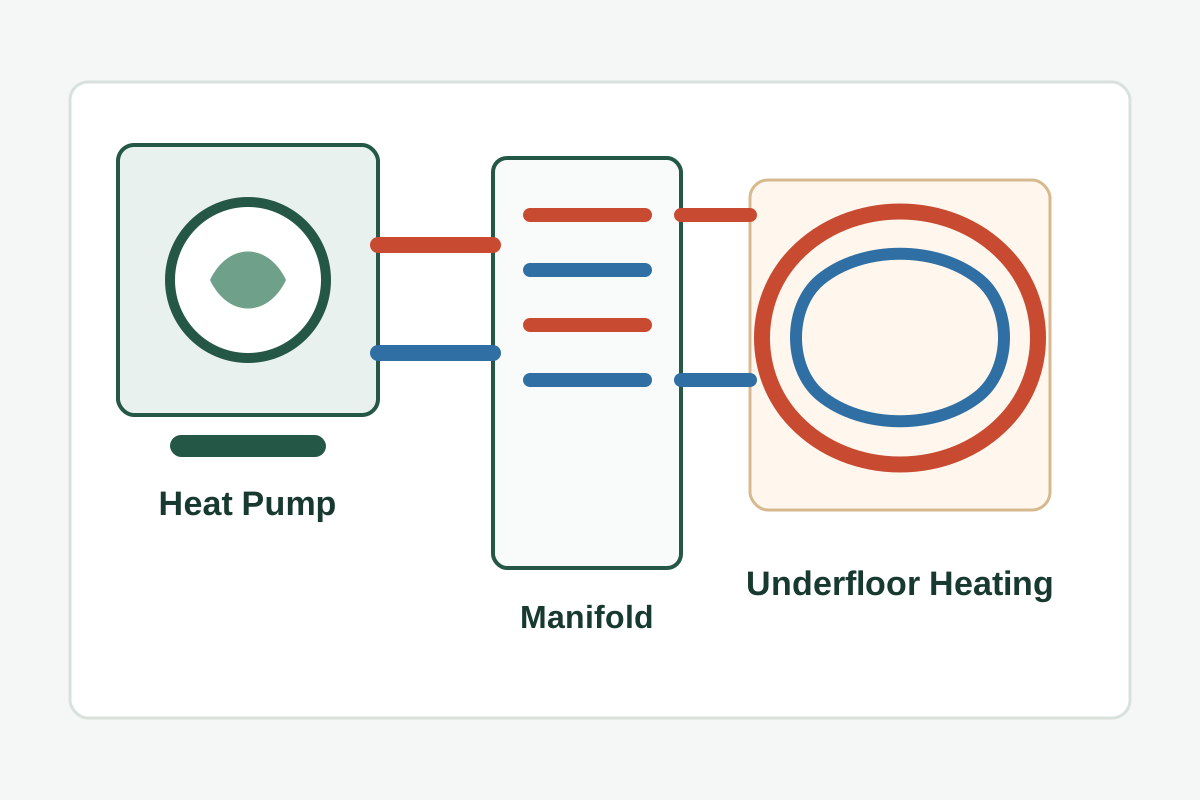
A heat pump and underfloor heating are a strong technical match for many new homes and carefully planned renovations in Cyprus. Underfloor heating is designed to work with lower water temperatures than a traditional radiator system. That operating pattern suits a heat pump, because the unit can work more steadily and does not need to chase unnecessarily high flow temperatures.
The combination is not automatically correct just because both technologies are modern. It depends on heat losses, floor build-up, insulation, pipe layout, manifold position, flow rates, controls and commissioning. The mild Cyprus climate helps, especially in Nicosia and other areas where winter design conditions are not extreme, but climate is only one part of the decision.
Where this solution fits
This solution fits best in new houses, apartments and residential developments where underfloor heating can be planned from the beginning. The floor layers, insulation, pipe spacing, manifold locations and zone strategy can then be coordinated with the building design instead of being forced in at the end.
It can also fit some renovations, but the project must be checked more carefully. Available floor height, door levels, finishes, waterproofing, existing slab condition and the time available for works all matter. Underfloor heating is not just an equipment replacement. It is a building intervention.
For developers, the value is early coordination. For plumbers and installers, the value is a clear technical scope: pipe circuits, manifolds, pressure testing, insulation, balancing and commissioning should be agreed before finishes are installed.
What must be checked before installation
The first check is the heating demand of the building. Selecting a heat pump only from floor area is not enough. Orientation, glazing, shading, insulation level, ceiling heights and room use all affect the required capacity and the way the system should operate.
The second check is the underfloor network. Circuit lengths must be reasonable, pipe spacing must suit the room load, and insulation below the pipework must be appropriate. The manifold should be accessible and positioned so that circuits can be balanced properly. Poorly balanced circuits lead to rooms that respond differently and make the system harder to control.
The third check is the hydraulic connection to the heat pump. Flow rate, strainers or filters, air removal, expansion volume, circulation and system protection must be considered. If domestic hot water is included, the cylinder or water-heating arrangement also needs to be discussed.
Controls are equally important. Underfloor heating has thermal inertia. It is not a fast on/off heat emitter. It normally works best with stable control, sensible zoning and weather compensation where appropriate. Overcomplicated room-by-room control can create flow problems if it is not coordinated with the heat pump.
Common mistakes
One common mistake is oversizing the heat pump to “be safe”. A unit that is too large may cycle instead of running steadily. Another mistake is treating underfloor heating as a simple product list rather than a designed system.
Projects also suffer when floor insulation is reduced, pipe circuits are too long, or balancing is skipped. Some installations use many thermostats and actuators without checking what happens to system flow when zones close.
Another mistake is promising savings without checking the building. Heat pump performance depends on the building load, water temperature, user habits, installation quality and commissioning. A serious technical discussion should be based on project data, not generic promises.
Practical recommendation
For a new home or development in Cyprus, discuss the heat pump and underfloor heating early, ideally while architectural and mechanical decisions are still open. Late decisions usually create compromises in floor build-up, manifolds, controls and installation sequencing.
For renovation work, start with the building and floor constraints before selecting the unit. If underfloor heating is not practical, other emitters or mixed solutions may be more suitable, but they also need technical checking.
A useful first step is to collect floor plans, floor finishes, available build-up height, mechanical-room location and domestic hot water requirements. With that information, the technical discussion becomes specific and late changes are easier to avoid.
Conclusion and CTA
A heat pump with underfloor heating can be a technically sound solution in Cyprus when it is designed as a complete system. Send drawings, room information or project requirements to Thomas Moudouros Ltd so the discussion can start from the correct engineering points.